Home Brave SVG Clipart
A Designer’s First Glance: Warm, Simple, and Ready for Stitching
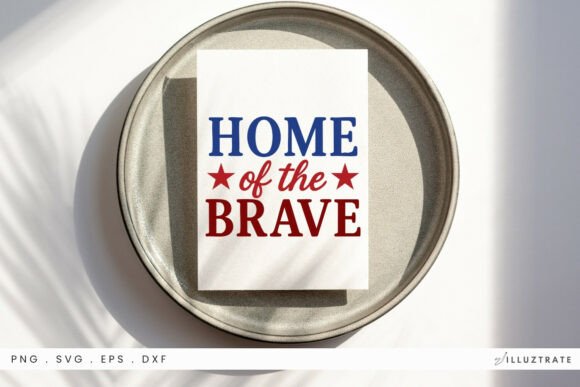
When I opened Home Brave SVG Clipart, my first thought wasn’t “cute” — it was “usable.” The clean line work, balanced letter spacing, and gentle curve of the phrase give it an approachable, hand-lettered warmth without sacrificing clarity. It reads instantly at a glance — no squinting, no decoding — which is exactly what you need when embroidering onto a busy tote bag or a baby onesie where subtlety can vanish under thread tension or fabric drape. As a designer who regularly translates digital graphics into machine embroidery designs, I appreciate how this layout avoids tight corners, overlapping strokes, or fragile serifs that struggle in satin stitch. It feels like a design made *for* makers, not just for screens.
Real Project Test: Embroidering a Linen Kitchen Towel for a Small Shop Launch
Last week, I used Home Brave SVG Clipart as the centerpiece for a limited-run batch of linen tea towels — part of a spring collection for my local craft boutique. I converted it to an embroidery file with moderate stitch density, opting for a soft matte cotton thread on natural unbleached linen. The result? A finished product that felt intentional, grounded, and quietly confident — not loud, not trendy, but deeply resonant with customers who value handmade authenticity. Shoppers paused at the display, ran fingers over the stitching, and asked about the meaning behind “Home Brave.” That kind of quiet engagement is gold for Etsy sellers and small shop owners building brand trust through tactile storytelling.
Where It Shines (and Where to Pause)
Home Brave SVG Clipart works especially well for:
- Custom apparel: Sweatshirt embroidery and relaxed-fit tees — its open letterforms breathe on knit fabrics without distorting.
- Personalized gifts: Baby embroidery on burp cloths or pillow covers — the theme lands gently, never cloying.
- Embroidered patch development: Clean outlines make it ideal for iron-on or sew-on patches meant for jackets, backpacks, or aprons.
- Holiday embroidery and wedding gifts: Think kitchen towels for newlyweds or linen napkins for Thanksgiving — it adds meaning without clutter.
- Digital embroidery file libraries: Its simplicity makes it versatile across skill levels, from hobbyists to commercial embroidery shops.
But — and this matters — Home Brave SVG Clipart needs thoughtful execution on certain materials:
- Avoid dense fill stitch on thin or stretchy fabric; opt for running stitch outlines or light fill stitch with tear-away stabilizer.
- On dark fabric, test thread color contrast early — lighter tones (ivory, oat, soft grey) read better than stark white, which can glare.
- Curved surfaces like caps or mugs (if digitized for embroidery) require careful hooping and possibly reduced letter height — those gentle curves don’t always translate smoothly to domed substrates.
- For tiny hoop sizes (under 4”), simplify or reposition elements — the full phrase may need slight compression or selective emphasis (e.g., bolding “Brave” only).
Design Integrity Meets Commercial Reality
What sets Home Brave SVG Clipart apart isn’t novelty — it’s reliability. In a market flooded with overly ornate quotes and pixelated downloads, this design holds up under scrutiny: no jagged vectors, no inconsistent stroke weights, no hidden layers that cause glitches during cutting or digitizing. That consistency directly supports your credibility as a craft business owner. When your Etsy listing shows a crisp embroidered sweatshirt using this graphic, buyers sense intention — not just decoration. They’re buying into a feeling (“Home Brave”) *and* trusting your craftsmanship to deliver it cleanly.
It also scales well across formats. Use it as-is for a minimalist tote bag design, layer it with simple floral motifs for a nursery decor set, or reverse it into a printable mockup for your online store. As a digital product seller, I’ve bundled it with coordinating stitch guides and thread palettes — customers love that extra layer of practical support. Just remember: if you’re selling finished embroidered items or reselling the file itself, confirm licensing terms before launch. The product description mentions Cricut and Silhouette compatibility, but embroidery use and commercial rights aren’t specified — always verify.
Practical Notes Every Embroidery Designer Should Run Through
- Test on scrap fabric first — especially with your chosen stabilizer and thread combo.
- Review stitch density: Too dense = puckering on lightweight linens; too sparse = gaps on textured weaves.
- Confirm hoop size compatibility before digitizing — some versions may need minor resizing for 4×4 or 5×7 hoops.
- Inspect small details in your embroidery software: check kerning, anchor points, and corner sharpness.
- Test black-and-white mockups — they reveal contrast issues faster than color previews.
- Compare light and dark fabric backgrounds side-by-side to choose optimal thread colors.
- Use proper stabilizer: medium-weight cut-away for knits, tear-away for stable wovens like cotton duck or linen.
- Confirm dual-use suitability: Does your version allow both personal projects *and* commercial embroidery? Don’t assume.
Final Thought: Not Just a Graphic — a Quiet Anchor
Home Brave SVG Clipart won’t shout from a craft fair table — and that’s its strength. It’s the kind of design that earns repeat orders because it integrates seamlessly into real life: stitched onto a child’s lunchbox napkin, framed in a cross-stitch sampler, or stitched inside a handmade apron’s pocket lining. For embroidery designers and creative entrepreneurs, it’s less of a “trend” and more of a foundational piece — dependable, emotionally resonant, and built to translate faithfully from screen to stitch. Whether you're prepping for your next Etsy drop, refining your boutique’s branding, or simply making something meaningful for someone you love, Home Brave SVG Clipart arrives ready to serve — quietly, confidently, and with care.